Four small figures standing in a boat mola, hand stitched Guna panel from Panama, 15.5 by 12 inches
Panama mola panel, hull outlined in white, green and orange, hand stitched reverse applique
Hand stitched Guna mola from Guna Yala Panama, row of upright paddle shapes above the crew
Four small figures standing in a boat mola, hand stitched Guna panel from Panama, 15.5 by 12 inches
Panama mola panel, hull outlined in white, green and orange, hand stitched reverse applique
Hand stitched Guna mola from Guna Yala Panama, row of upright paddle shapes above the crew
Four small figures standing in a boat mola, hand stitched Guna panel from Panama, 15.5 by 12 inches
Panama mola panel, hull outlined in white, green and orange, hand stitched reverse applique
Hand stitched Guna mola from Guna Yala Panama, row of upright paddle shapes above the crew
Four small figures standing in a boat mola, hand stitched Guna panel from Panama, 15.5 by 12 inches

Four People, One Boat, And No Discussion Panama Mola

PM3716T

Regular price$ 36.99
/
Shipping calculated at checkout.
  • Handmade in Panama
  • Fair Trade
  • Width: 15.5 in
  • Height: 12 in

Four People, One Boat, And No Discussion Mola is a hand sewn textile by a Guna (Kuna) artisan in Panama. Four small people face straight out of a broad boat, each one in a different color with dotted eyes and ladder striped chests, while upright paddle shapes line the top like oars put away for the moment. Their straight faced stare is oddly charming, like being caught interrupting a very important trip. It is 15.5 inches wide and 12 inches high, a size that suits a hallway, a family room or a cabin wall. Hang it in your lake house, a boathouse or a family room full of people who all want to steer.

Molas are built by stacking several layers of colored cotton, then cutting down through one layer at a time so the colors underneath show through, and turning every raw edge under and stitching it closed by hand. The technique is called reverse appliqué, and a good panel is judged by how fine the stitches are and how many layers deep the cutting goes. This one came from Guna Yala, the San Blas islands off Panama's Caribbean coast, where the designs draw on the birds, fish, plants and geometric patterns of the islands and rainforest. It is ready to frame, mount, or sew into a pillow or a quilt panel, and no two are ever alike.

Founded in 1991, TraderBrock celebrates the handcraft of Latin America's indigenous peoples. Every piece comes from Guna, Wounaan and Emberá artisans we know by name, and all profits are reinvested in their communities for education, tools and the teaching of ancestral techniques. Buying from TraderBrock helps keep their culture and their traditions alive.

Width: 15.5"
Height: 12"
SKU: PM3716T

Each mola is stitched entirely by hand, so gentle care keeps it looking its best.

Hand wash in cold water with a mild soap, on its own. Do not wring, bleach, or tumble dry. Lay flat to dry, out of direct sun. If needed, press on the back with a warm iron, with a cloth between the iron and the mola.

This site is protected by hCaptcha and the hCaptcha Privacy Policy and Terms of Service apply.

What customers say about our molas

4.9 out of 5 · 778 reviews from our Etsy and eBay shops
Read all reviews
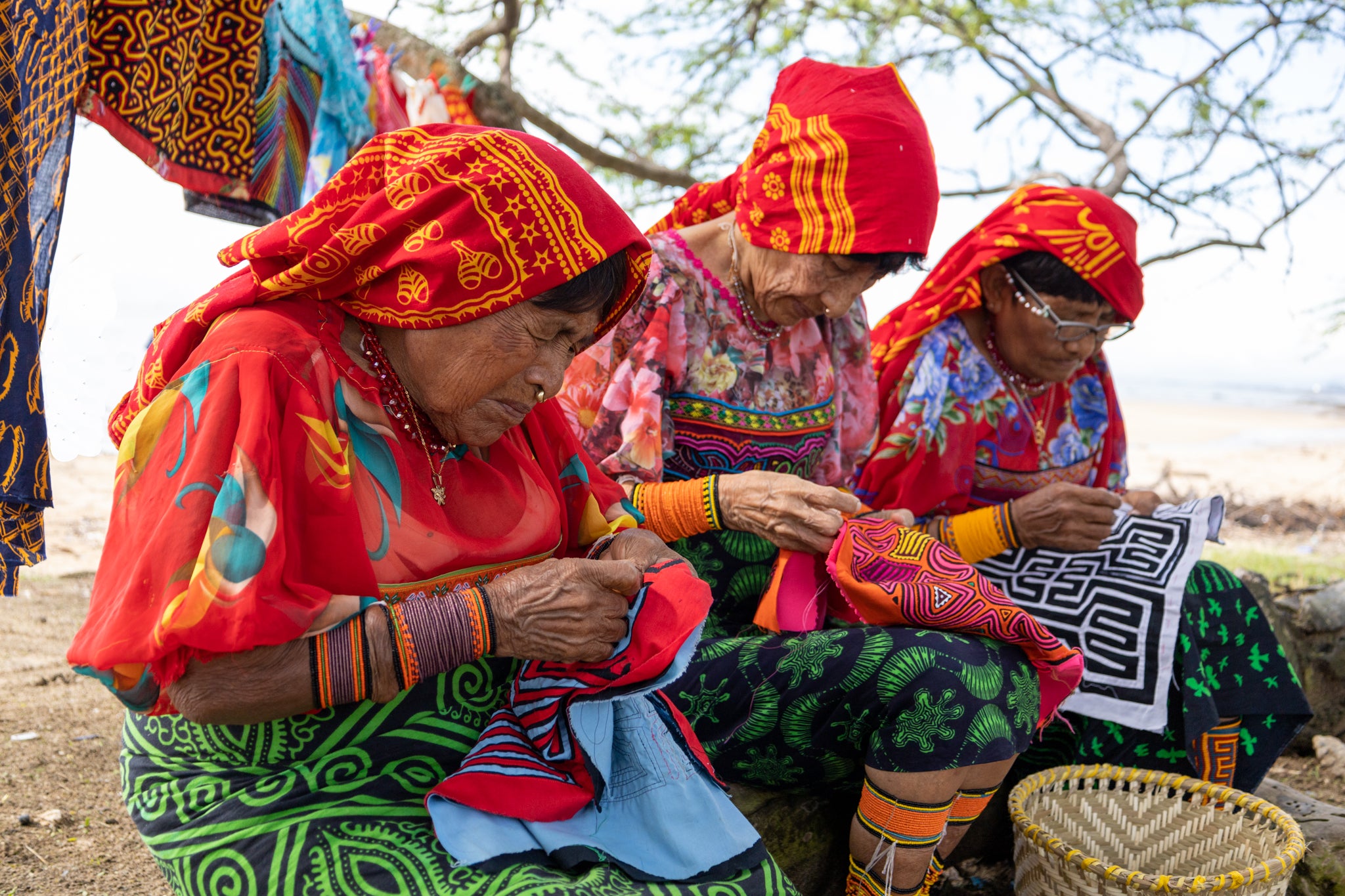
Three Guna women in red head scarves and mola blouses sewing molas together outdoors in Panama

Fair Trade

Made in Panama

by talented artisans, supporting local communities and preserving their rich cultural heritage

Mola Story

Creating a Mola

The process begins with layering vibrant cotton fabrics, which are carefully cut to reveal intricate patterns beneath. Guna artisans then use a combination of appliqué and reverse appliqué techniques, often enhancing each piece with fine hand embroidery. The result is a stunning, one-of-a-kind work of textile art rich in tradition, color, and cultural meaning.
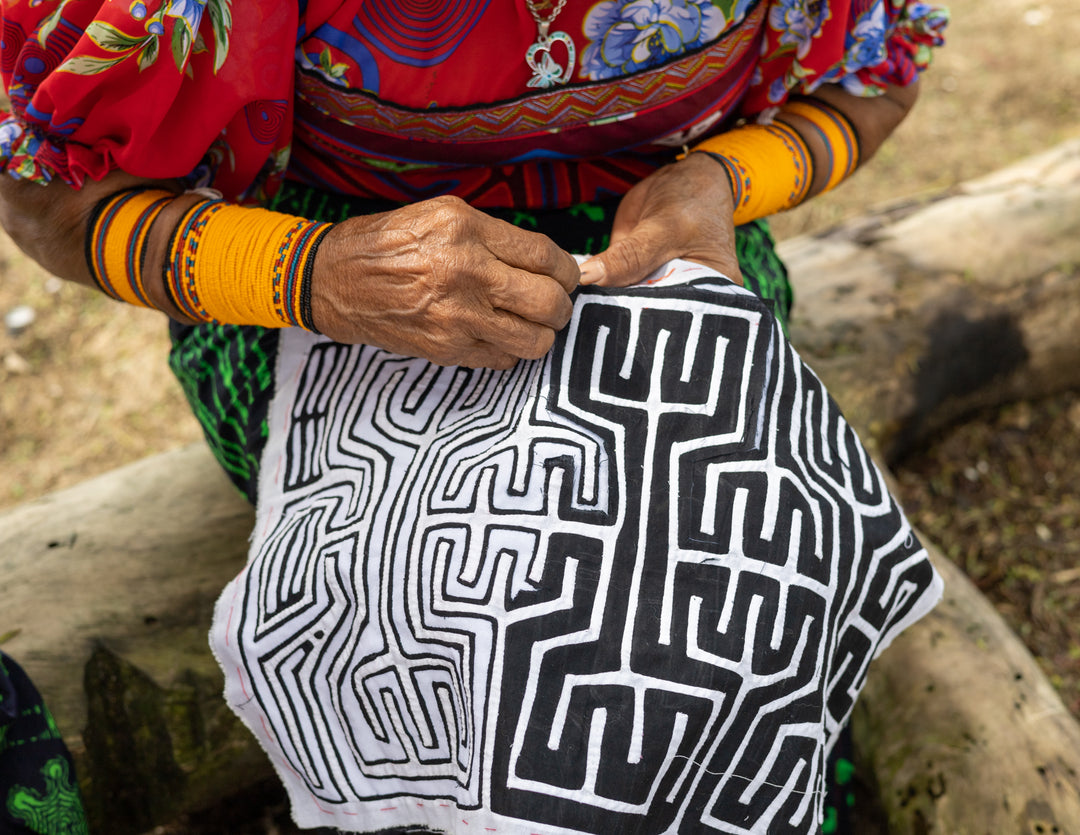
Close-up of a Guna artisan's hands stitching a black and white mola, with traditional beaded bands on her wrists

meaning behind the designs

Animals

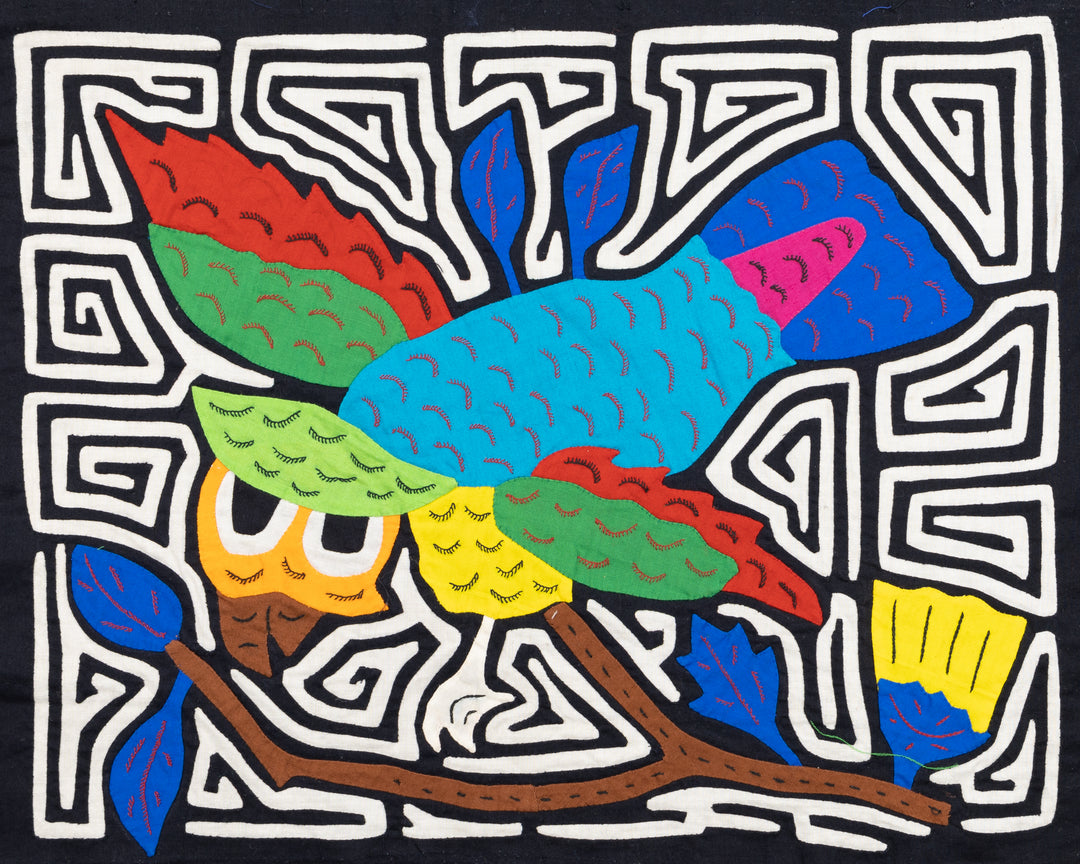
Molas often showcase animals such as birds, fish, turtles, and more. These designs can range from realistic to abstract and sometimes feature multiple animals in a single piece. Each depiction carries symbolic meaning and reflects the Guna people's deep connection to nature.
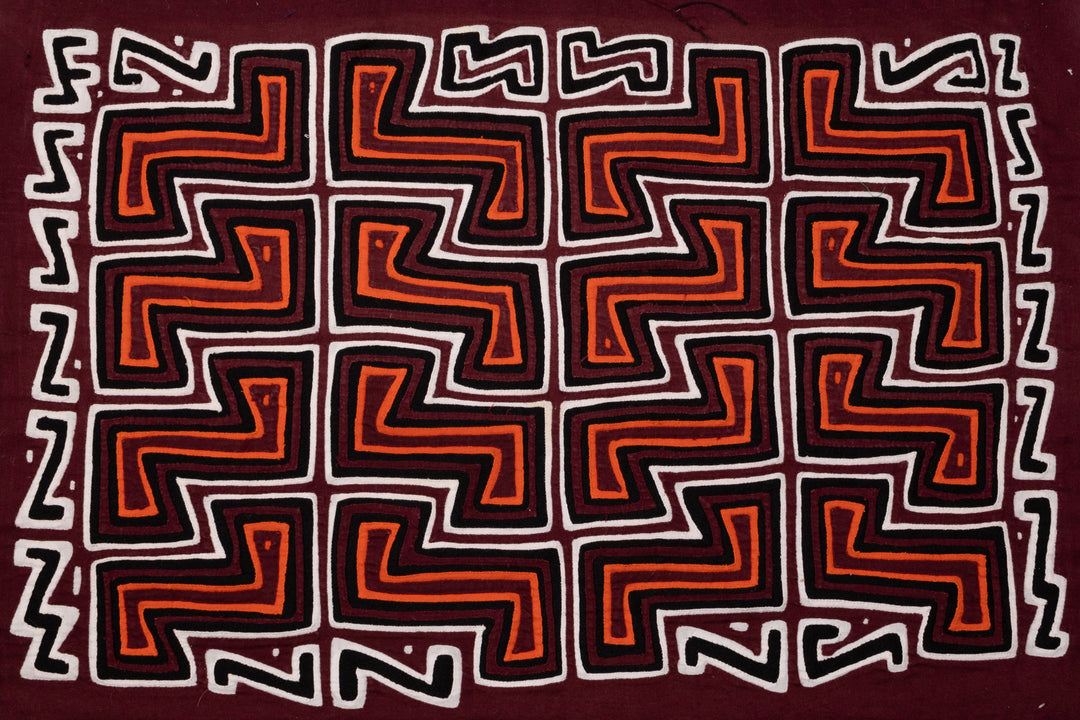
Geometric Guna mola with a repeating orange and black maze pattern outlined in white on deep maroon

Geometric

Many molas incorporate intricate geometric patterns like triangles, diamonds, and zigzags. These designs often use vibrant color combinations and may be symmetrical or asymmetrical, symbolizing balance, energy, or cultural motifs.
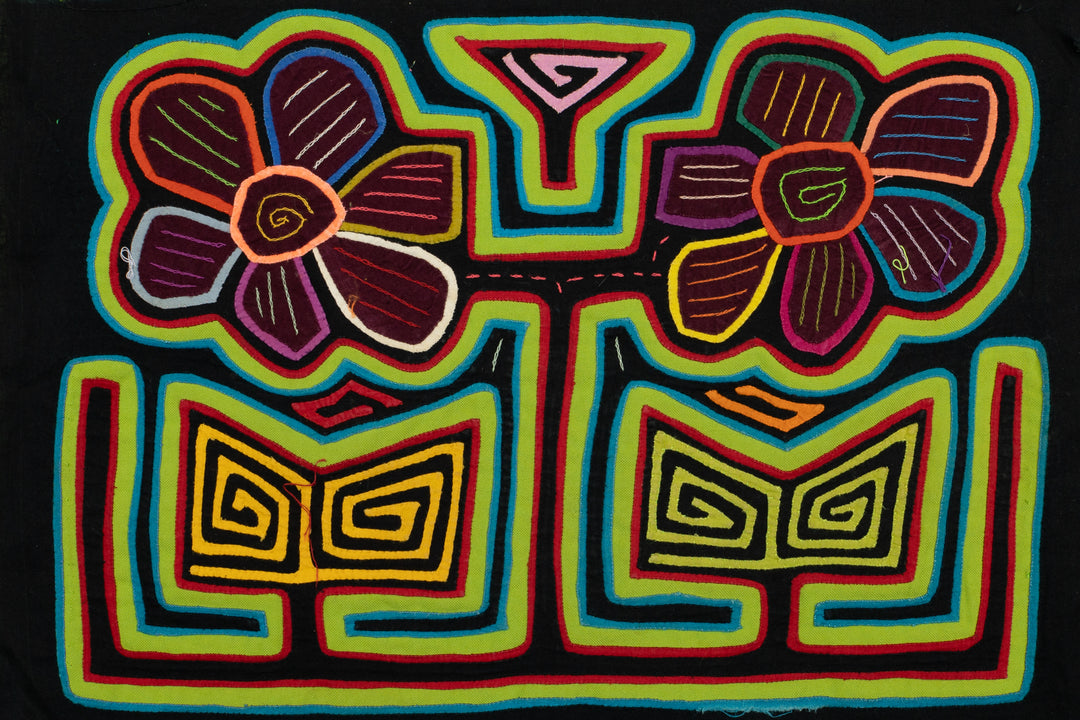
Floral Guna mola with two purple flowers above yellow spiral motifs, outlined in green, red, and gold on black

Floral

Floral molas highlight the beauty of nature through depictions of flowers, leaves, and vines. Whether stylized or realistic, these patterns often feature vivid colors and represent growth, life, and harmony with the natural world.
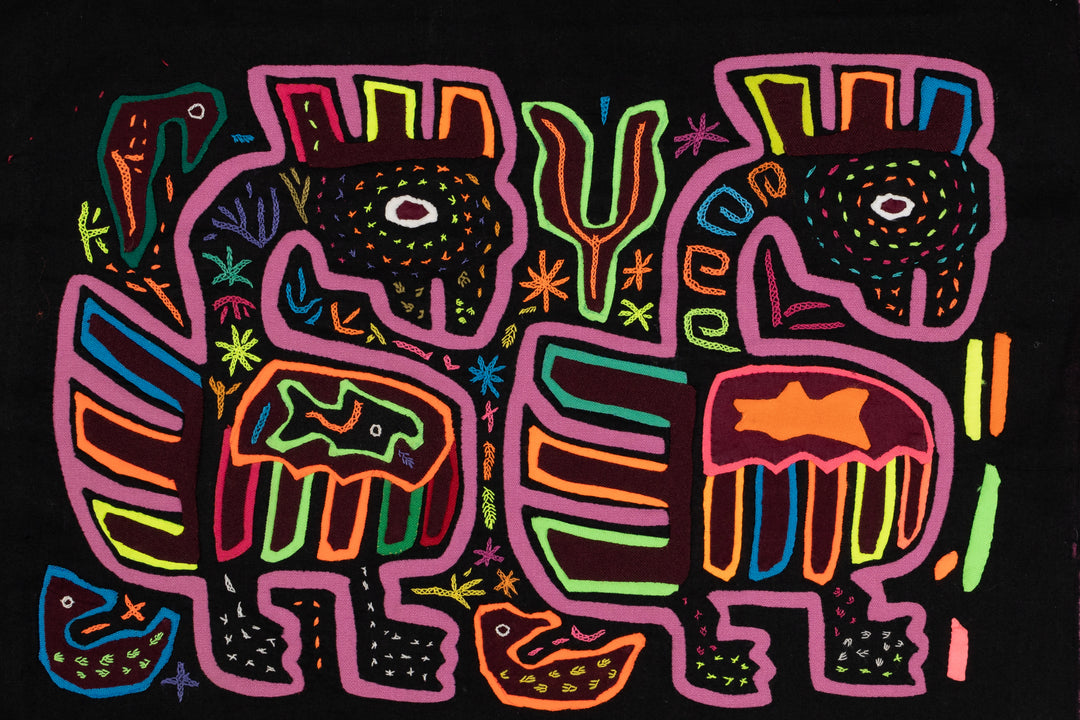
Guna mola of two mythical creatures outlined in pink, orange, and green, with small birds and stars on black

Mythical creatures

Some molas portray mythical beings such as dragons, mermaids, or hybrid animals. These imaginative designs often blend storytelling with spiritual symbolism, reflecting legends passed down through generations.
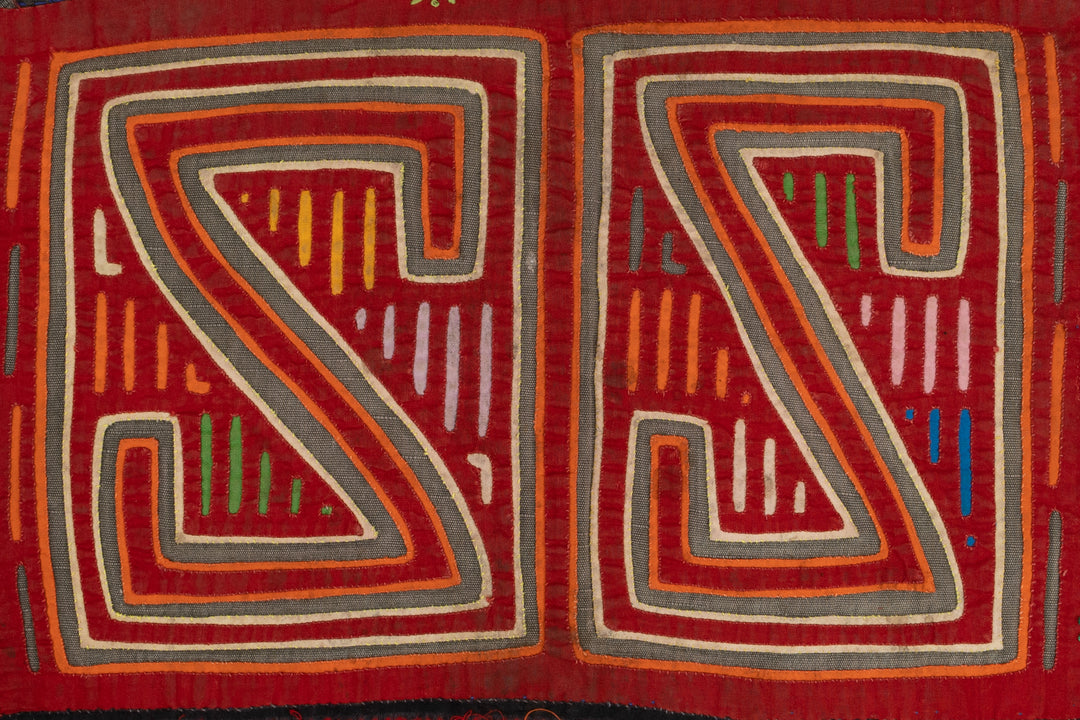
Guna mola with two large S-shaped spiral symbols in gray, orange, and white on red, filled with small colored stitches

Cultural symbols

Molas sometimes feature sacred or traditional symbols that hold cultural or spiritual meaning. These motifs may represent identity, protection, or ancestral knowledge, offering a glimpse into the values of Guna heritage.
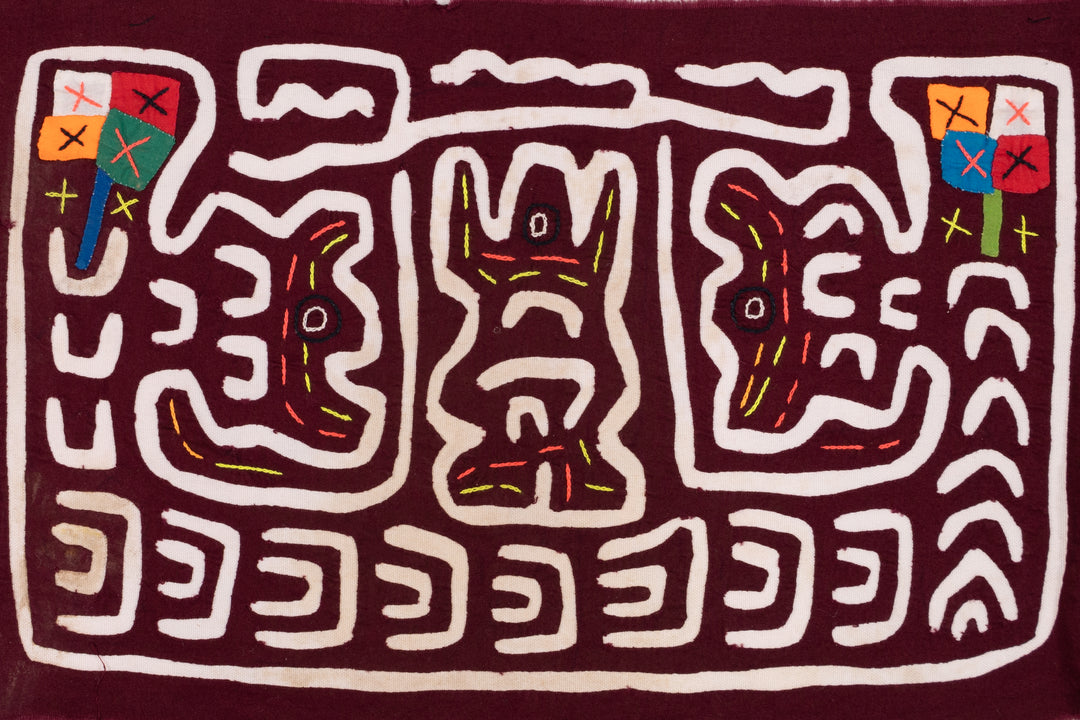
Guna mola of figures and animals in a white maze on maroon, with small colorful flags in the upper corners

Landscapes

Scenic molas depict landscapes such as islands, rivers, or village life. These compositions capture the daily environment of the Guna people and celebrate their deep bond with the land and sea.
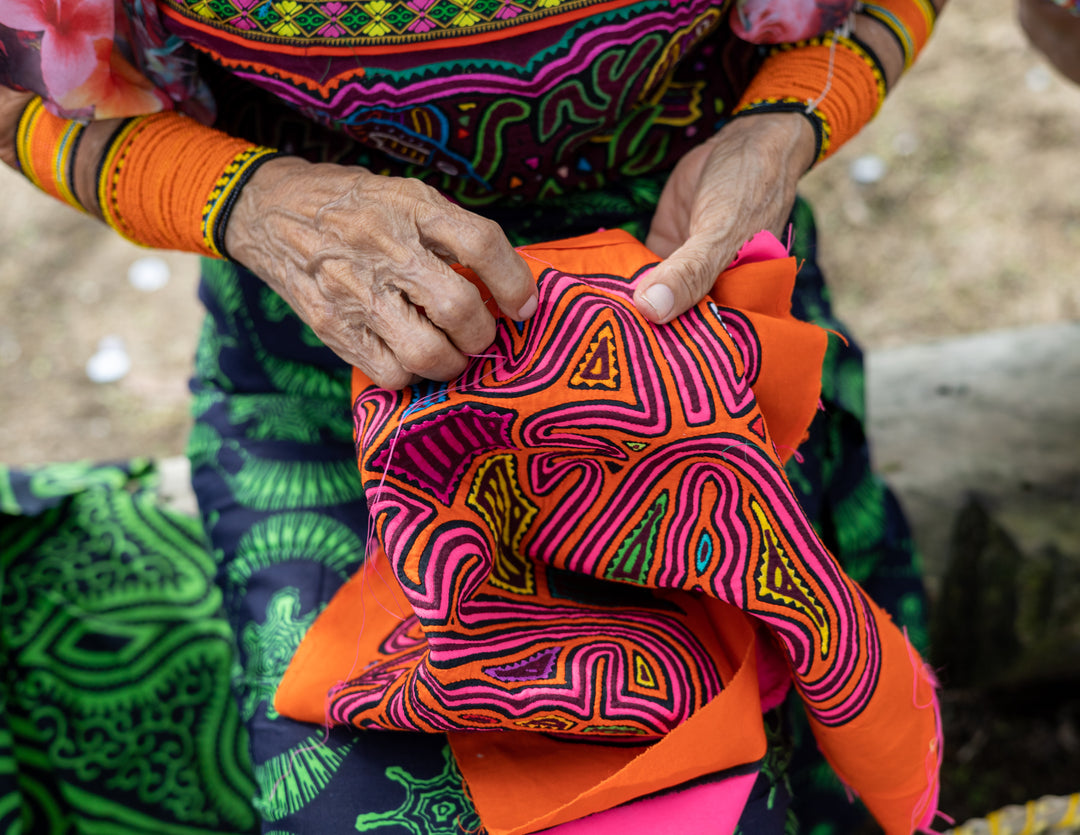
Guna artisan's hands sewing a pink and orange mola, wearing beaded arm bands and a patterned skirt

Cultural Meaning

Molas are powerful expressions of Guna identity, heritage, and worldview. Through intricate designs, they tell stories of myths, traditions, and everyday life. As an essential part of Guna women's clothing, molas reflect cultural pride, creativity, and a deep connection to community and history.

You may also like


Recently viewed