
The Rich History of Panama Molas: Origins and Evolution of an Indigenous Art Form
Panama Molas are a fascinating and colorful textile art form that has captivated the hearts and minds of people around the world. Originating from the Kuna people of the San Blas Islands off the coast of Panama, these intricate, hand-sewn panels tell a story of cultural preservation and evolution. This blog will delve into the rich history of Panama Molas, exploring their roots in Kuna culture and their significance in Panamanian heritage.
Origins of Panama Molas
The Kuna people have been living on the San Blas Islands for centuries, preserving their culture, language, and traditions despite numerous challenges. The word "mola" means "clothing" in the Kuna language, and the art of making molas is believed to have begun in the 18th century. Before the introduction of European textiles, Kuna women would paint their bodies with intricate geometric designs. These patterns later transitioned into molas as they adapted to new materials brought by European traders and missionaries.
The Art of Mola Making
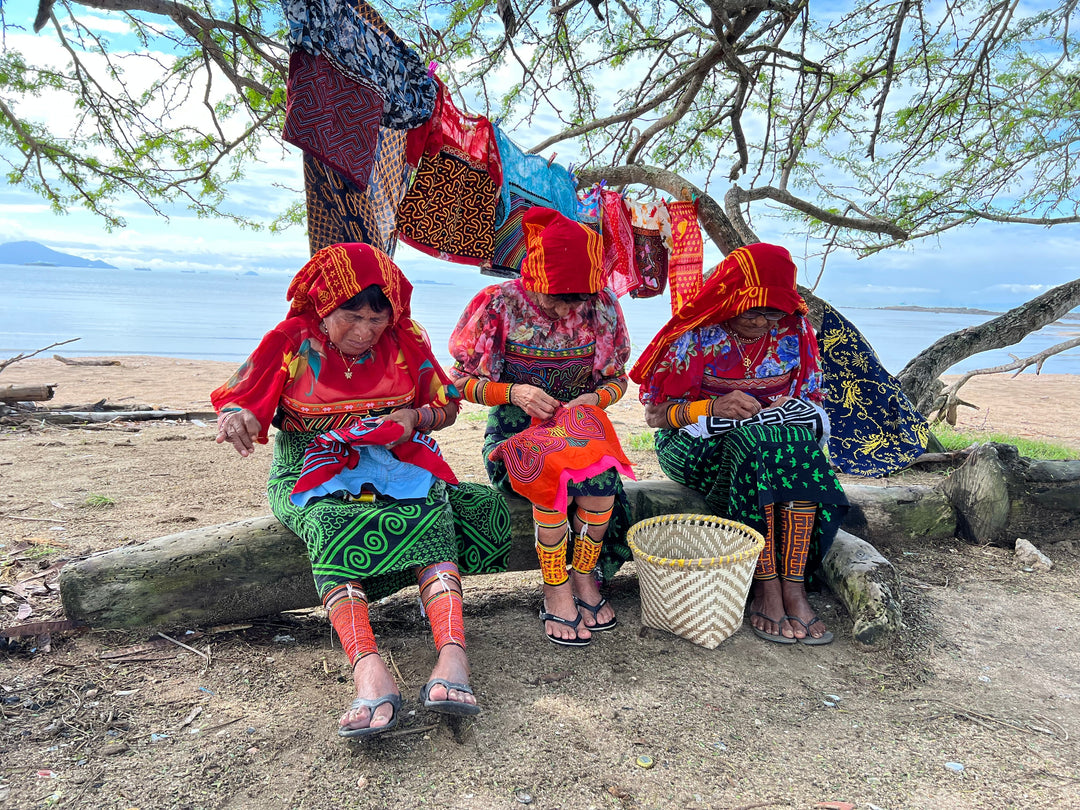
Panama Molas are created using a reverse appliqué technique, where multiple layers of fabric are sewn together and then parts are cut away to reveal contrasting colors underneath. The process begins with a design, which is drawn onto a base fabric. Additional layers of fabric are added on top, each in a different color, and then strategically cut away to expose the desired colors and create the pattern.
Mola designs often feature geometric patterns, animals, plants, or other symbols of the Kuna people's culture and environment. The intricacy and skill involved in crafting a mola can take weeks or even months to complete, with each piece reflecting the unique vision and talent of the artist.
Cultural Significance
For the Kuna people, molas are not just beautiful works of art; they are a symbol of cultural identity and pride. Molas are traditionally worn by Kuna women as part of their blouses, with each mola telling a story about the wearer's family, community, or personal beliefs. They serve as a way for Kuna women to express themselves and maintain a connection to their ancestors and traditions.
Molas have also played a significant role in Kuna women's fight for autonomy and cultural preservation. In the early 20th century, the Kuna people faced intense pressure from the Panamanian government to assimilate and abandon their traditional practices. Wearing molas became an act of resistance and a means of preserving their cultural heritage in the face of adversity.
The Evolution of Mola Art
As mola art gained international recognition, its designs and techniques have continued to evolve. Contemporary mola artists have experimented with new materials, colors, and themes, blending traditional Kuna symbols with modern influences. Today, molas can be found not only on traditional clothing but also on accessories, home décor, and other items that appeal to a global audience.
Molas have become an important part of Panama's cultural heritage, with the government recognizing their significance and supporting efforts to preserve and promote the art form. Organizations such as the Mola Art and Craft Gallery in Panama City are dedicated to showcasing the work of Kuna artists and educating visitors about the history and techniques behind mola art.
Dating back to 2020 I purchased 29 molas in Guatemala, fairly close to the Panama’s San Blas Islands They are just like new. I will be showing them in Ottawa Canada on the 5th and 6th of December 2025. I’ve never talked to anyone about them. People have no idea that the Kuna have created stunningly beautiful workmanship. I am 82 years old. I do not want these items to be found in the garbage. I know from reading online that these molas are in perfect condition. I remember when I was in Guatemala how these beautiful works of art were treasured by the Mayans. Have a beautiful day, from Yolande
Thank you to the artist and to those who gave me the room. All of this beauty without even using so much of an eighth of all these tiny pieces, with absolutly tiny threads. I remember when watching them work that literally it wasn’t really cotton, it must have been threads upon threads. While in Guatemala I watched these women sit in the earth and use different threads and color and they used the trees to make their huilpes and textiles that created their skirts, which would be placed on the earth at night in order to keep them warm while they slept. The volcanos kept them warm also. Living in Guatemala even for just a year was such a gift for me.
I purchased my molas, 29 of them, when my son who is 56 years old today was in his late teens and early 20’s. They are very beautiful. As a seamstress I have been in awe of them because mine used 3 layers of colorful cotton…while cutting away their desired artwork only to find orange, pink, white, yellow, pale green and lime, one blue, orange, white plus two shades of red. and black and brown. My thanks and gratitude for your artistic beauty.
Leave a comment