
What Is a Mola? The Complete Guide to Panama's Most Iconic Textile Art

The word “mola” means “shirt” in the Guna language. But calling a mola a shirt is like calling the Sistine Chapel ceiling a paint job.
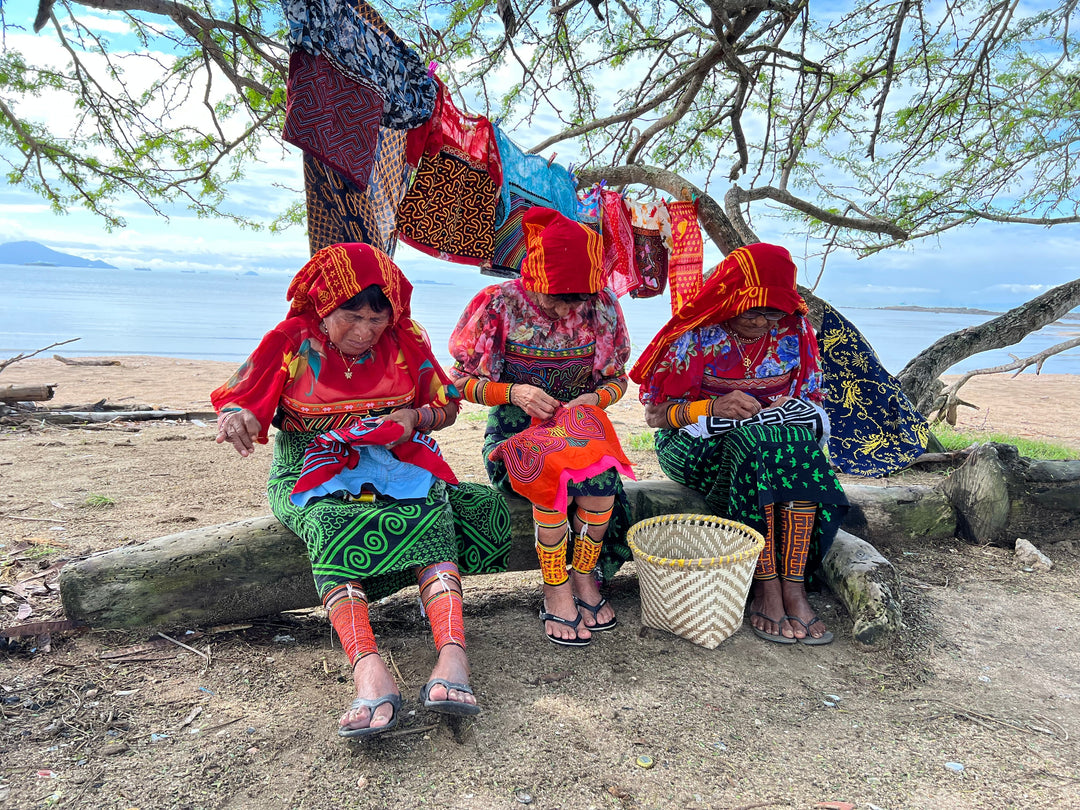
A mola is a handmade textile panel: a piece of wearable art created by Guna women in Panama using a technique called reverse appliqué. Layers of brightly colored fabric are stacked together, then carefully cut away and stitched to reveal intricate designs beneath. Each panel takes weeks or even months to complete. No two are alike. And for over a century, they have been one of the most powerful symbols of indigenous identity in the Americas.
A quick note on spelling: you may see this community written as Guna or Kuna. Both refer to the same indigenous people of Panama. Kuna is the older Spanish spelling you'll still find in museums, older books, and on many collector labels. In 2010, the community officially adopted Guna, because their language has no hard “K” sound. We use Guna throughout this guide, but if you've grown up calling these textiles Kuna molas, you're not wrong. You're just using the older name for the same proud people.
At TraderBrock, we’ve been working directly with Guna artisan partners like Maria Castro since 1991. In this guide, we’ll walk you through everything: how molas are made, what their designs mean, how to recognize quality, and why owning one means more than decorating a wall.

A Brief History: From Body Paint to Revolution
The story of the mola begins long before cloth and thread. For centuries, Guna women painted their bodies with geometric designs using natural pigments. Bold lines and repeating patterns told stories about their world. When European trade brought woven cotton to Guna communities, the women began transferring those same designs onto fabric, first through simple weaving, and eventually through the layered, stitched technique we see today.
By the late 1800s, the mola blouse had become a central part of Guna women’s daily dress. It was a yoke-style garment with a decorated panel on the front and back. It was beautiful. It was distinctive. And it was deeply tied to Guna identity.
Which is exactly why the Panamanian government tried to ban it.
The Ban and the Revolution
In 1918, Panama’s president Belisario Porras launched an assimilation campaign targeting indigenous communities. Guna women were forbidden from wearing mola blouses, nose rings, and traditional leg wrappings. The Guna language was suppressed. Western-style clothing was forced upon them.
But the Guna refused.
In February 1925, the Guna people rose up in what became known as the Guna Revolution. It was a brief but decisive uprising that asserted their right to govern themselves, practice their culture, and wear the clothing that defined them. Making and wearing a mola became an act of political defiance.
The revolution succeeded. By 1938, the San Blas Comarca, now called Guna Yala, was officially established as an autonomous territory. This made it the first formally recognized indigenous homeland in the region.
Today, Guna women wear molas with pride. The mola is not a relic or a souvenir. It is a living symbol of a people who fought for the right to be themselves.

How a Mola Is Made: The Reverse Appliqué Technique
Most appliqué works by layering fabric on top of a base and stitching it down. Mola-making does the opposite.
A Guna artisan starts by stacking multiple layers of different-colored cotton fabric, typically two to seven layers, one on top of another. She then uses small, sharp scissors to cut shapes into the top layer, exposing the color underneath. The cut edges are carefully folded under and sewn down with tiny, nearly invisible stitches. Then she cuts into the next layer, revealing a new color. Layer by layer, the design emerges.
This is why it’s called reverse appliqué: instead of building up, the artisan cuts down.
The finest molas add even more complexity. Some include traditional appliqué on top of the reverse layers. Others incorporate embroidery, zigzag borders, and “dientes” (teeth-like sawtooth edges) that require extraordinary precision. The most skilled artisans produce stitches so small and tight that they’re nearly invisible to the naked eye, a source of deep pride and prestige within Guna communities.
What It Takes
A single mola panel can take anywhere from two weeks to several months to complete, depending on the complexity of the design and the number of layers. The most intricate pieces, those with five, six, or seven layers of color, represent hundreds of hours of patient, hand-guided work.
There are no machines involved. No shortcuts. Every stitch is placed by hand, using a needle and thread matched to the color of the fabric being sewn. The artisan works without a pattern or template. The design lives in her mind, shaped by tradition, personal expression, and the creative culture of her community.
What Mola Designs Mean
Mola designs are not random. They carry meaning: some deeply traditional, others reflecting the artisan’s personal world.

Geometric Patterns
The oldest mola designs are geometric: repeating lines, maze-like forms, concentric shapes, and interlocking patterns. These trace directly back to the body painting traditions of Guna ancestors and are considered the most culturally significant designs. Geometric molas are often the most technically demanding because symmetry and precision are essential.

Animal and Nature Motifs
Birds, sea turtles, fish, parrots, jaguars, and other creatures from the Guna homeland in the San Blas Islands and surrounding waters appear frequently in mola art. These are not just decorative. In Guna cosmology, animals carry spiritual significance and appear in traditional stories passed from generation to generation. A bird mola might represent freedom, migration, or a character from a Guna creation story.

Modern and Contemporary Themes
Guna women have always been creative interpreters of the world around them. It’s not unusual to see molas that incorporate modern imagery: helicopters, brand logos, political slogans, or scenes from daily life. These “modern molas” are sometimes dismissed by collectors who prefer traditional designs, but they actually represent one of the most vibrant aspects of the art form. They show the willingness to evolve while staying rooted in technique and identity.

Abstract and Artistic Expression
Some molas don’t depict anything recognizable at all. They are pure explorations of color, form, and negative space. Textile abstractions that rival contemporary fine art in their visual impact. These pieces are often the work of the most experienced artisans, women who have spent decades mastering technique and now use the medium to express something deeply personal.
How to Identify a Quality Mola
Not all molas are created equal. If you’re buying a mola, whether as a first piece or an addition to a collection, here’s what to look for.
Number of Layers
A two-layer mola is the simplest form. Fine molas typically have three to five layers, and the most exceptional pieces use six or seven. More layers mean more cutting, more stitching, and more visual depth. Hold the piece up to light. You should be able to see the layered color structure.
Stitch Quality
This is the single most important quality indicator. On a high-quality mola, the stitches are tiny, even, and nearly invisible. The thread color matches the fabric it’s sewn to, so your eye sees smooth color transitions rather than visible stitching. If you can see prominent, uneven stitches, the piece is lower quality.
Design Complexity
Look at the overall composition. Are the shapes consistent and symmetrical where they should be? Are there fine details: zigzag borders, tiny cutout accents, embroidered elements? A complex, balanced design with multiple types of detail reflects a skilled, experienced artisan.
Color Harmony
The best mola artists choose color combinations that vibrate with energy but remain balanced. Traditional color palettes tend toward bold primaries (red, orange, yellow, black), but contemporary artisans experiment with a wider range. What matters is that the colors feel intentional, not random.
Signs of Authenticity
Molas that were actually worn as part of a Guna woman’s daily dress, before being sold, sometimes show subtle signs of use: fading in areas exposed to sun, stitch marks along the edges where the panel was sewn into a blouse, or slight softening of the fabric. These are marks of authenticity, not defects. They mean the piece was part of someone’s life before it became part of yours.
Molas as a Living Art Form
It would be easy to frame mola art as a relic: a disappearing tradition preserved in museum cases. That’s not what’s happening.
Guna women continue to make and wear molas every day. Young girls learn the technique from their mothers and grandmothers. Artisan communities actively create new pieces for both personal wear and sale. The art form is alive, evolving, and economically vital to Guna families.
When you buy a mola from a fair-trade source that works directly with Guna artisans, you’re not preserving a dying tradition. You’re participating in a thriving one. You’re providing income that supports families, education, and community infrastructure. And you’re helping ensure that an art form born from resistance continues to flourish.

The Artisans Behind the Art
At TraderBrock, we don’t buy molas from anonymous middlemen. We work with named artisan partners: women like Maria Castro, a Guna mola artist whose work has been part of our collection for years.
Maria’s molas are recognizable for their precision and color sense. Every piece she creates reflects decades of practice and a deep connection to the Guna design tradition. When you buy one of her molas from TraderBrock, her name is on the listing. You know whose hands made it. You know the community it came from. And 100% of our sales revenue is reinvested into Panamanian artisan communities, funding education, medical care, land purchases, and tools.
That’s the difference between buying a mola and buying a piece of someone’s life’s work.
The same partnership model runs through the rest of our work in Panama, from Panamanian paintings to cocobolo wood carvings and handwoven baskets.
How to Display a Mola
Molas are made to be seen. Here are the most popular ways collectors display them:

Framing. A shadow box frame or floating frame is the most common display method. It protects the textile while allowing the colors and layers to show. Choose a neutral frame (black, natural wood) and a simple mat so the mola is the star.

Hanging unframed. Some collectors prefer to hang molas using textile hanging rods or quilt-display methods, which preserves the fabric’s natural drape and texture.
Gallery grouping. Multiple molas of different sizes and color palettes create a striking gallery wall. The variety of designs and colors naturally complements each other because they share the same visual language.

Textile integration. Quilters and crafters sometimes incorporate mola panels into larger textile projects: pillows, table runners, quilts, and bags. The fabric is durable and the stitching is strong enough for everyday use.
We’ll be publishing a detailed collector’s guide to framing and displaying molas soon. Stay tuned.
Bring Home a Piece of Guna History
Every mola in TraderBrock’s collection is handmade by a Guna artisan in Panama. Every piece is one of a kind. And every purchase supports the artisan communities we’ve partnered with since 1991.
Whether you’re starting your first collection or adding a museum-quality piece to an existing one, there’s a mola here for you.
Browse our full collection of authentic Guna molas
Explore More Fair-Trade Art from Panama
- Panamanian Paintings: vibrant folk art from Guna and Emberá painters
- Cocobolo Wood Carvings: hand-carved animals and figures in rich tropical hardwood
- Emberá & Wounaan Baskets: tightly woven plant-fiber baskets and plates
- Carnival Masks: bold, theatrical pieces from Panama’s festival tradition
- Artisan Jewelry: tagua, silver, and handmade beadwork
Leave a comment